Language Fragmentation and Diversity in Papua New Guinea
How speakers in Papua New Guinea account for over 12% of the world’s languages—and what that says about culture, isolation, and identity.

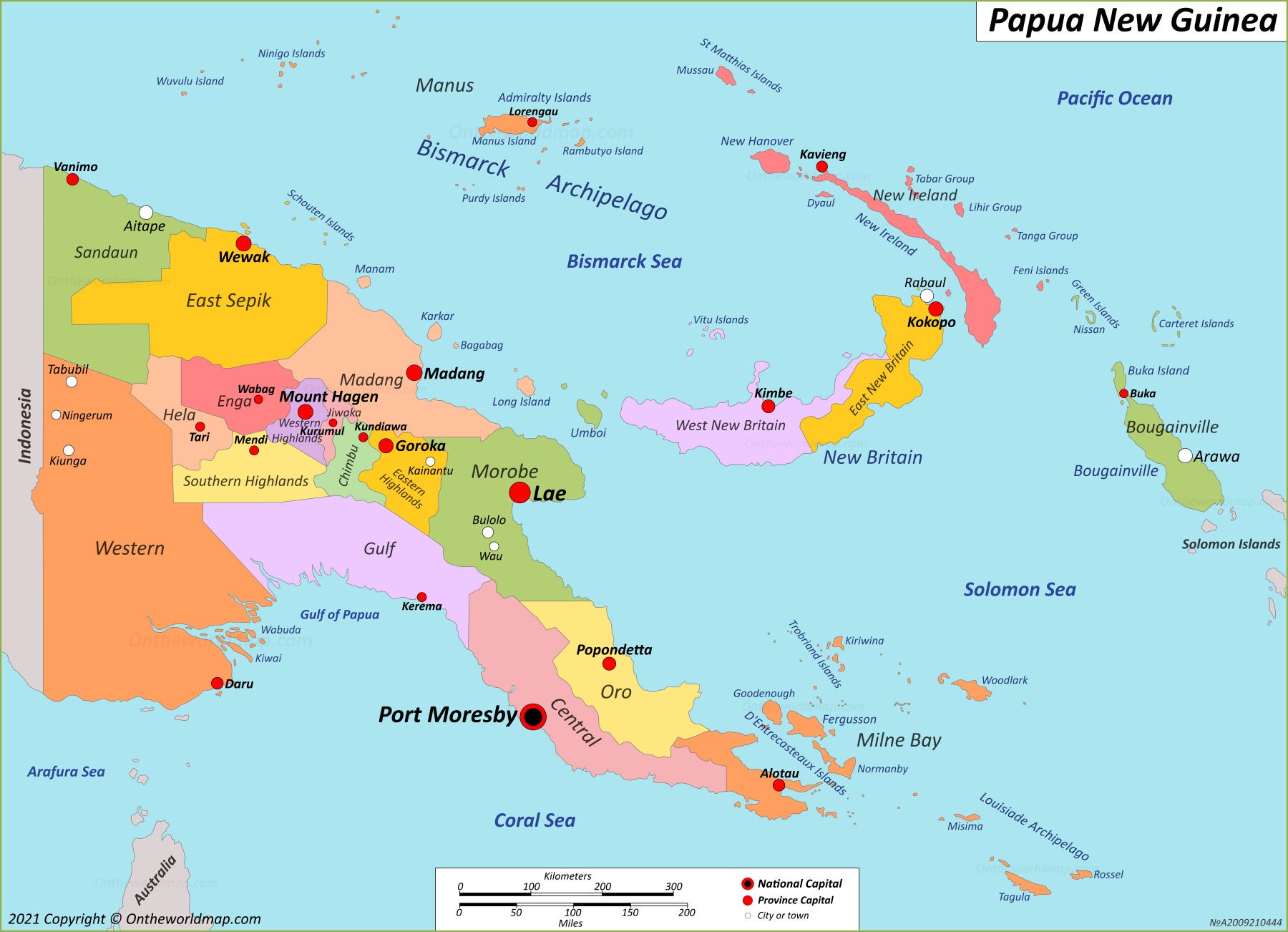
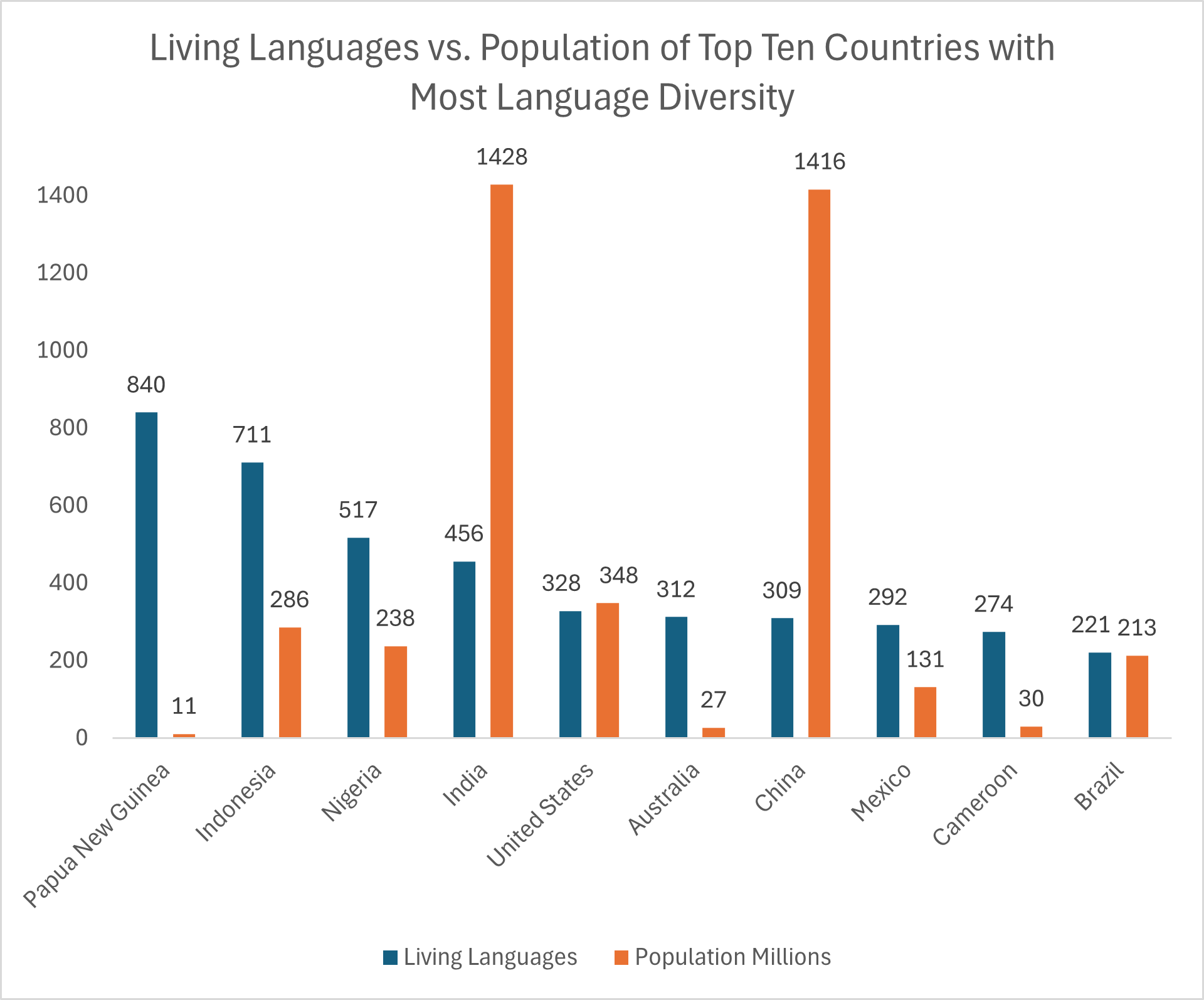
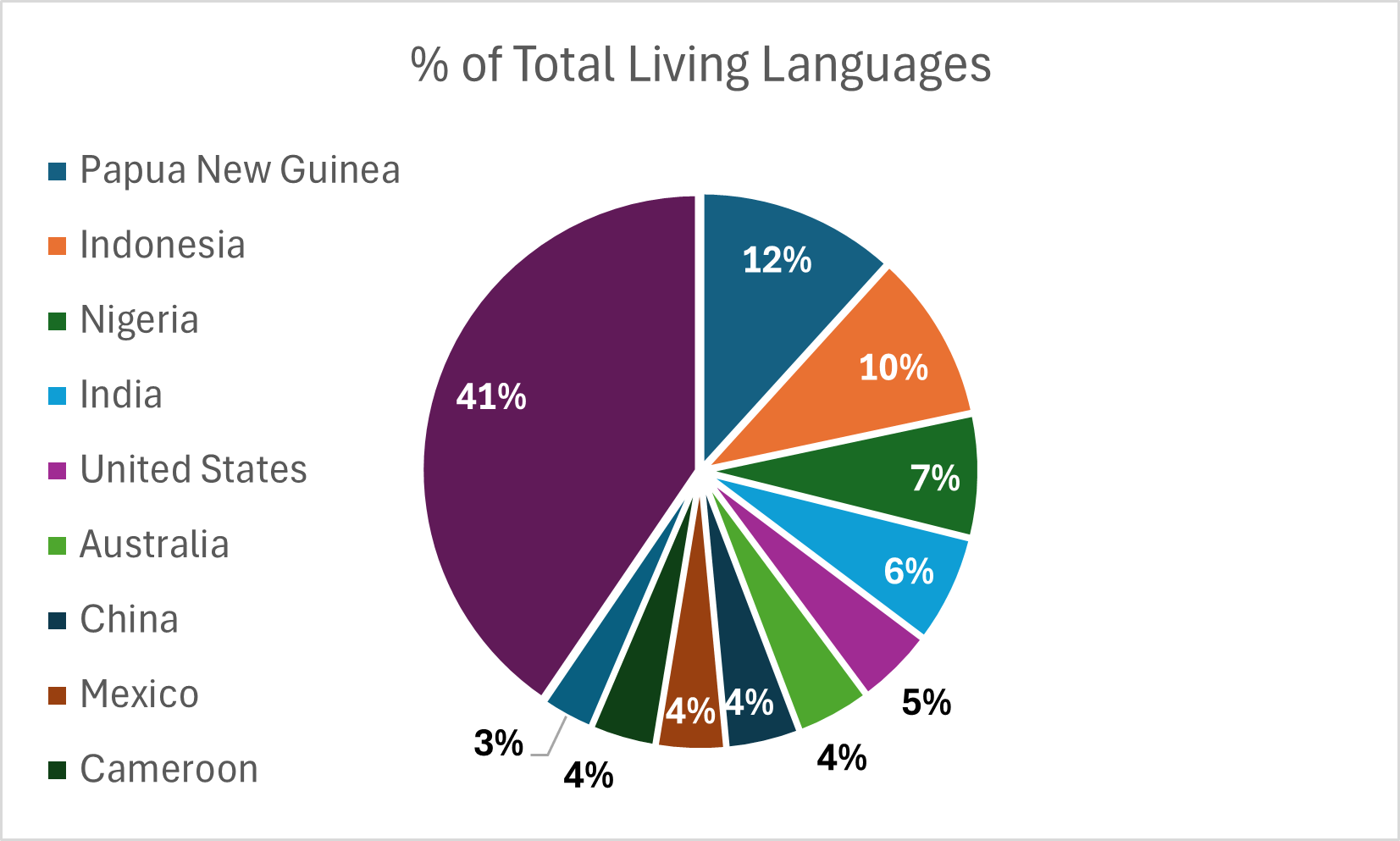
Source: Ethnologue
There are 7,159 languages in use today, not including dialects. In earlier, more tribal eras, communities were smaller, generally more self-sufficient, and had less need and ability to interact with one another. Over time, dialects diverged to the point of being mutually unintelligible languages. However, many forces counteracted this effect, namely:
Hierarchical states and empires promoted/imposed official languages
Trade and agricultural intensification beyond subsistence created shared languages (lingua francas).
Geography in flatter, more navigable regions, and advances in transportation technology allowed for more interaction between groups.
Writing systems and mass religions spread dominant languages across vast territories.
These forces created a long-term drift toward linguistic unification, reducing the number of distinct languages over time.
So why does Papua New Guinea break the mold?
Papua New Guinea’s (PNG) staggering linguistic diversity is the result of a perfect storm of factors that encouraged, rather than erased, fragmentation:
Isolation: The country’s jagged highlands, deep valleys, thick rainforests, and remote islands made contact between groups difficult, even well into the 20th century.
Time: PNG has been inhabited for around 50,000 years, during which period the languages evolved independently.
Tribalism: Pre-colonial PNG lacked any unified state. Even during colonial control (1880s-1975) when Germany, the UK, and later Australia controlled the territory, colonization was thinly spread and mostly confined to the coastal regions. The highlands, where Papuan language is the most diverse, were believed to be uninhabited until 1932. Language in PNG also serves as a boundary marker of identity and territory. Even neighboring tribes may speak entirely different, and sometimes intentionally exclusive, languages.
Two Language Families: Papuan languages, spoken mainly in the interior highlands, descend from the island’s earliest settlers. Austronesian languages are found along the coasts and islands, brought by seafaring migrants from Southeast Asia.

PNG didn’t experience the usual consolidating forces until very recently. As a result, it remains the most linguistically fragmented society on the planet.
Main Languages Today
Many Papua New Guineans speak:
Their tribal languages
Tok Pisin for daily interaction - Creole lingua franca
English for school and government
Final Thoughts
30% of languages in PNG are considered endangered, largely being replaced by Tok Pisin and English. Some are spoken and understood by only a few hundred people. Preserving these languages is, in many ways, a beautiful act. In PNG, language is not just a means of communication. Languages embody the subtle distinctions that make each tribe and community unique. All else being equal, I would hope that this incredible cultural diversity endures.
But it’s important to recognize that this erosion isn’t being driven by direct suppression or disrespect for tribal identity. Rather, it’s the result of people navigating the practical demands of modern life, which increasingly reward fluency in Tok Pisin and English. In most cases, the speakers themselves are choosing to shift, seeking education, participation in regional economies, and opportunities beyond subsistence agriculture. That trade-off is real. As people strive for better lives, greater mobility, economic security, and social interaction, they prioritize the languages that advance those goals.
📬 Like what you’re reading?
Forward this email - and if it was forwarded to you, subscribe and get future charts straight to your inbox. These are not in-depth analyses by any means, but rather fun explorations with some high-level questions.
Please email back with any suggestions for future ideas or comments on how to improve. I would love to hear from you!
Thank you for reading!